You filed your tax return, everything looked fine, and then a letter shows up from the IRS asking you to prove you’re actually you. If you’ve received a CP5447-series or CP5071-series notice, don’t panic. But don’t ignore it either. These are identity verification notices, and how you respond determines whether the IRS processes your return or puts it on hold.
What These Notices Mean
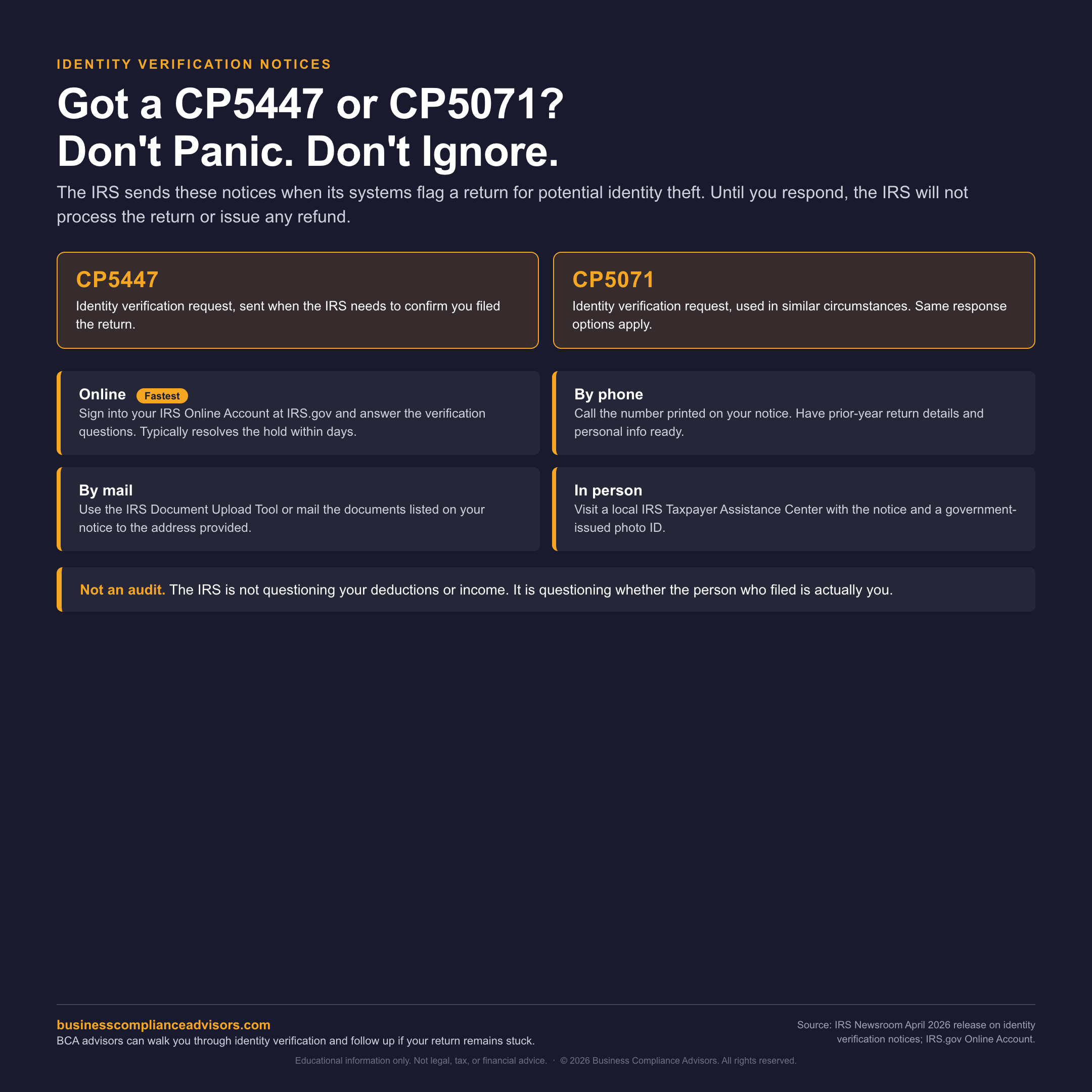
The IRS sends CP5447 and CP5071 notices when its systems flag a return for potential identity theft. The agency isn’t saying your return is fraudulent. It’s asking you to confirm that you actually filed it. Until you respond, the IRS will not process the return or issue any refund.
This is separate from an audit. The IRS isn’t questioning your deductions or income. It’s questioning whether the person who filed the return is actually you.
How to Verify Your Identity
Online (fastest). Sign into your IRS online account at IRS.gov (or create one if you don’t have one). Answer the identity verification questions. This is the simplest path and typically resolves the hold within days.
By phone. Call the number printed on your notice. Be ready to answer questions about your return, prior-year filings, and personal details. Wait times vary, but this is reliable if you can’t verify online.
By mail or in person. You can also respond by mail using the IRS Document Upload Tool or by mailing documents to the address on your notice. If neither of those options works, visiting a local IRS Taxpayer Assistance Center with a government-issued photo ID and your notice is another fallback.
If You Didn’t File the Return
That’s a different problem. If you receive a verification notice for a return you never filed, someone may have used your identity to file a fraudulent return. Respond to the notice indicating you did not file, and the IRS will guide you through identity theft protection steps. Don’t delay on this. The longer a fraudulent return sits uncontested, the more complicated the cleanup.
What Happens If You Don’t Respond
The IRS won’t process the return. Your refund stays frozen. And the hold can carry forward into future years, meaning returns you file next year could also be delayed. The good news: even if you missed the original response window, verifying your identity later still works. The IRS will honor the original received date of your return and issue any refund due once the verification clears.
Tax Professionals Can Help
If you have a Form 2848 (Power of Attorney) on file, your tax professional can contact the IRS on your behalf. The IRS still encourages the taxpayer to be available during the call to help verify identity, but having an authorized representative speeds up the process.
BCA helps clients navigate these verification holds, whether it’s a straightforward identity confirmation or a more complex identity theft situation. If you’ve received a CP5447 or CP5071 notice and aren’t sure what to do next, contact us before the response window closes.
Source: IRS e-News for Tax Professionals, Issue 2026-14, Item 7: “Did you know? Verifying tax returns” (April 9, 2026); IRS CP5447 and CP5071 notice instructions.