As 2025 ends, the One Big Beautiful Bill Act (OBBBA) creates several time-sensitive tax planning opportunities for business owners. Multiple provisions took effect this year, and some strategies require action before December 31.
Accelerate Equipment Purchases for Full Expensing
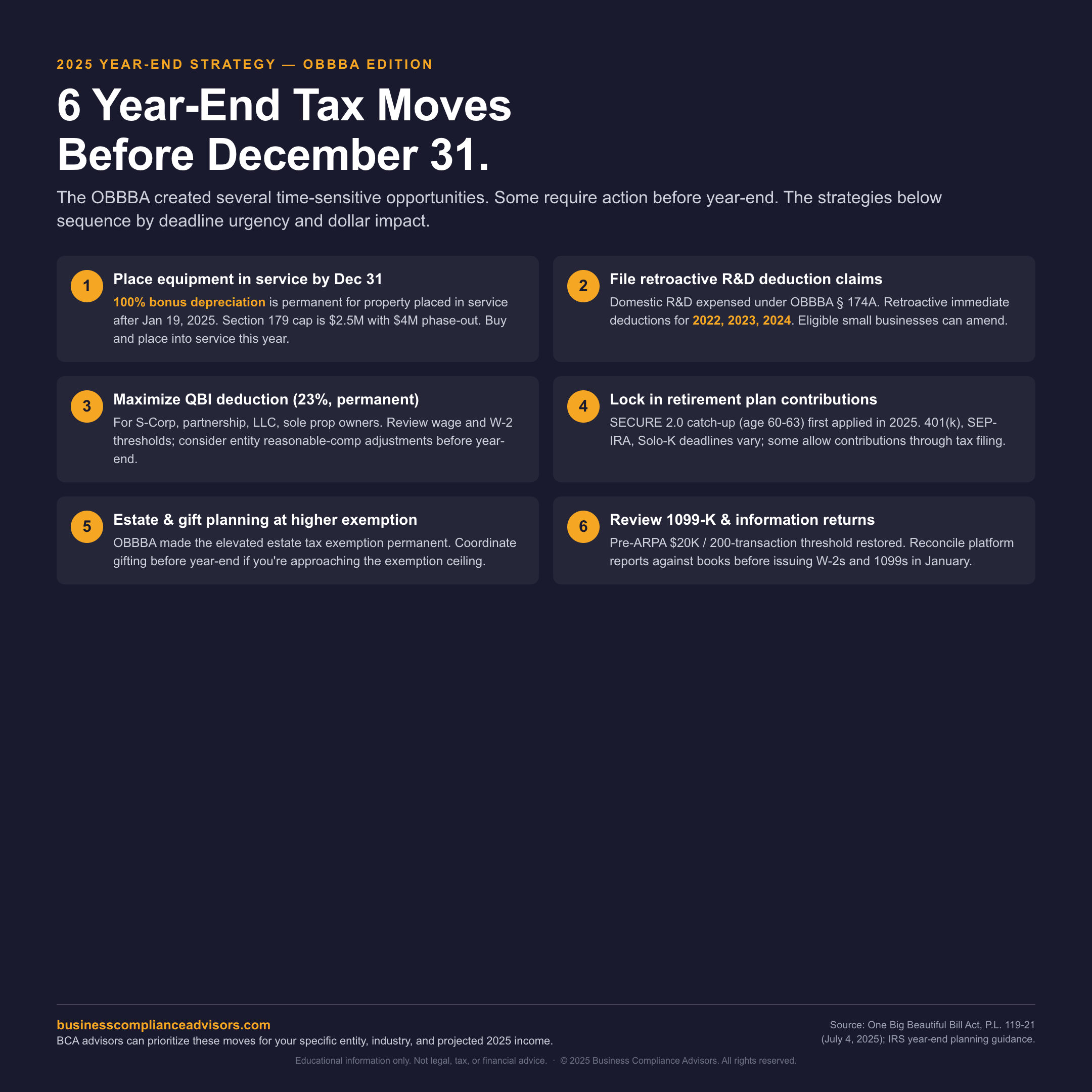
With 100% bonus depreciation now permanent for property placed in service after January 19, 2025, you can fully deduct any qualifying business equipment, vehicles, technology, or machinery placed in service before December 31, 2025. The Section 179 deduction limit is now $2.5 million with a $4 million phase-out threshold. If you have been deferring capital expenditures, this is the year to act. Whether it is a new delivery vehicle, manufacturing equipment, or office technology, the full deduction is available now.
File Retroactive R&D Deduction Claims
If your business incurred domestic research and development expenses during 2022, 2023, or 2024, the OBBBA allows you to retroactively claim immediate deductions for those costs that were previously required to be capitalized over five years. Eligible small businesses (those with average gross receipts under $31 million) can file amended returns to recover these deductions. The tax savings could be substantial, and your tax advisor can help determine whether the cost of filing amended returns is justified by the refund.
Maximize the SALT Deduction Increase
The SALT deduction cap has jumped from $10,000 to $40,000 for taxpayers earning under $500,000. If you itemize deductions and live in a state with high income or property taxes, this change alone could be worth thousands. Consider prepaying your January property tax installment before December 31 if it helps you use more of the $40,000 cap and if itemizing saves you more than the standard deduction.
Last Call for Electric Vehicle Credits
The OBBBA terminated the EV purchase tax credit for vehicles acquired after September 30, 2025. If you purchased a qualifying electric vehicle before that deadline, make sure you have the documentation needed to claim the credit on your 2025 return. For EV charging infrastructure, the Section 30C credit continues through June 30, 2026, so there is still time for that investment, but plan accordingly.
Review Estimated Tax Payments
With new deductions for tips, overtime, vehicle loan interest, and the higher SALT cap, your 2025 tax liability may be lower than you estimated at the start of the year. Review your Q4 estimated payment (due January 15, 2026) to avoid overpaying. On the other hand, if you have not been accounting for the phase-out of clean energy credits, your liability may be higher than expected.
Consider Qualified Small Business Stock (QSBS)
For stock acquired after July 4, 2025, the per-issuer gain exclusion cap increased from $10 million to $15 million, the gross asset threshold for qualifying corporations rose from $50 million to $75 million, and the initial holding period was reduced from five years to three years. If you are an investor in startups or early-stage companies, these changes could improve your after-tax returns significantly on qualified investments.
The Senior Deduction
Taxpayers who reached age 65 during 2025 can claim an additional $6,000 deduction on top of the existing senior standard deduction. This is available for tax years 2025 through 2028. Combined with other OBBBA provisions, this could meaningfully reduce your adjusted gross income.
BCA recommends scheduling a year-end tax planning session with your tax advisor or tax professional before December 15 to evaluate which of these strategies apply to your specific situation. Many of these opportunities are time-sensitive and require action before the year closes.
Disclaimer: This article is for informational purposes only and is not legal, tax, or financial advice. BCA is not a licensed professional services firm. We help clients assess their situations and work with licensed attorneys, tax advisors, and other qualified professionals on your behalf. Read our full Terms and Conditions. Have questions? Contact BCA and let us put the right team together for you.
Sources and Further Reading
- IRS One Big Beautiful Bill Provisions: irs.gov
- Grant Thornton Energy Incentives Under OBBBA: grantthornton.com
- Spencer Fane QSBS Benefits Expansion: spencerfane.com
- WCG Inc Section 179 Deductions: wcginc.com