
If you skipped filing because you weren’t required to, the IRS says you could be walking away from real money.
In Tax Tip 2026-28, the IRS reminded taxpayers that filing isn’t always about owing. A lot of people who fall below the filing threshold still qualify for refundable credits or have withholding sitting in the Treasury’s account with their name on it. If you had federal income tax withheld from a paycheck, made estimated payments, or qualify for a refundable credit, the only way to get that money back is to file a return.
Credits worth checking before you decide to skip filing
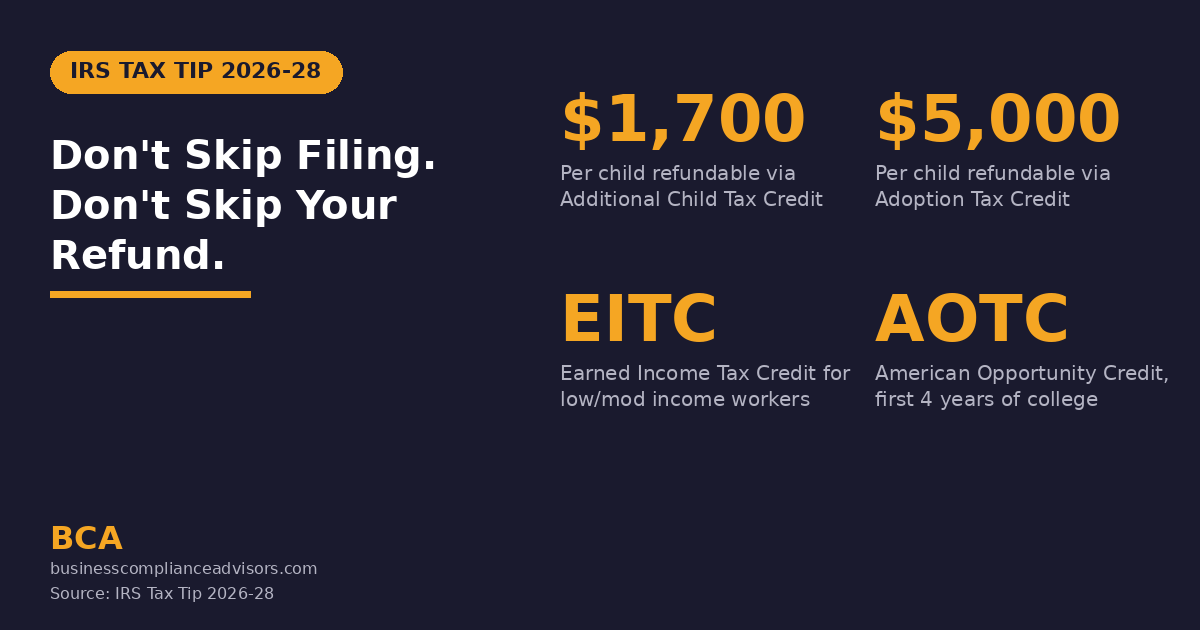
The Earned Income Tax Credit (EITC) is the big one for low and moderate income workers and families. The credit amount depends on income, filing status, and family size, and the IRS provides an EITC Assistant to check eligibility.
The Child Tax Credit is worth up to $2,200 per qualifying child for 2025, with up to $1,700 per child refundable through the Additional Child Tax Credit. If your kids don’t qualify for the CTC (for example, they turned 18 during the year), the Credit for Other Dependents may still apply. It also covers parents and other dependents you support.
The Adoption Tax Credit is now partially refundable. For 2025, the maximum is $17,280 per eligible child, with up to $5,000 refundable per qualifying child. Any nonrefundable portion carried forward into future years can’t be converted into a refundable amount later, so the numbers matter in the year you claim it.
Education credits round out the list. The American Opportunity Tax Credit covers qualified expenses for the first four years of higher education, and the Lifetime Learning Credit covers tuition and related expenses for eligible students at eligible institutions.
What to do if you’re on the fence
The IRS Interactive Tax Assistant can help you work through whether filing makes sense and whether you qualify for common credits. But if your situation involves a mix of W-2 income, side gig earnings, dependents, or adoption expenses, a quick conversation with a tax advisor will usually save you more than the cost of the consultation. BCA works with individuals and small business owners to identify credits that get overlooked and make sure refundable money actually comes back to you instead of staying with the Treasury.
Source: IRS Tax Tip 2026-28, Don’t leave a potential refund on the table.