

IRS mail is not a verdict. It is a workflow.
That distinction matters because many taxpayers make the same mistake: they let the envelope sit unopened, then deal with the problem only after penalties, interest, or collection notices have already escalated. IRS Tax Tip 2026-39 is a basic reminder, but it is a good one. Open the letter. Read it carefully. Identify what the IRS says changed.
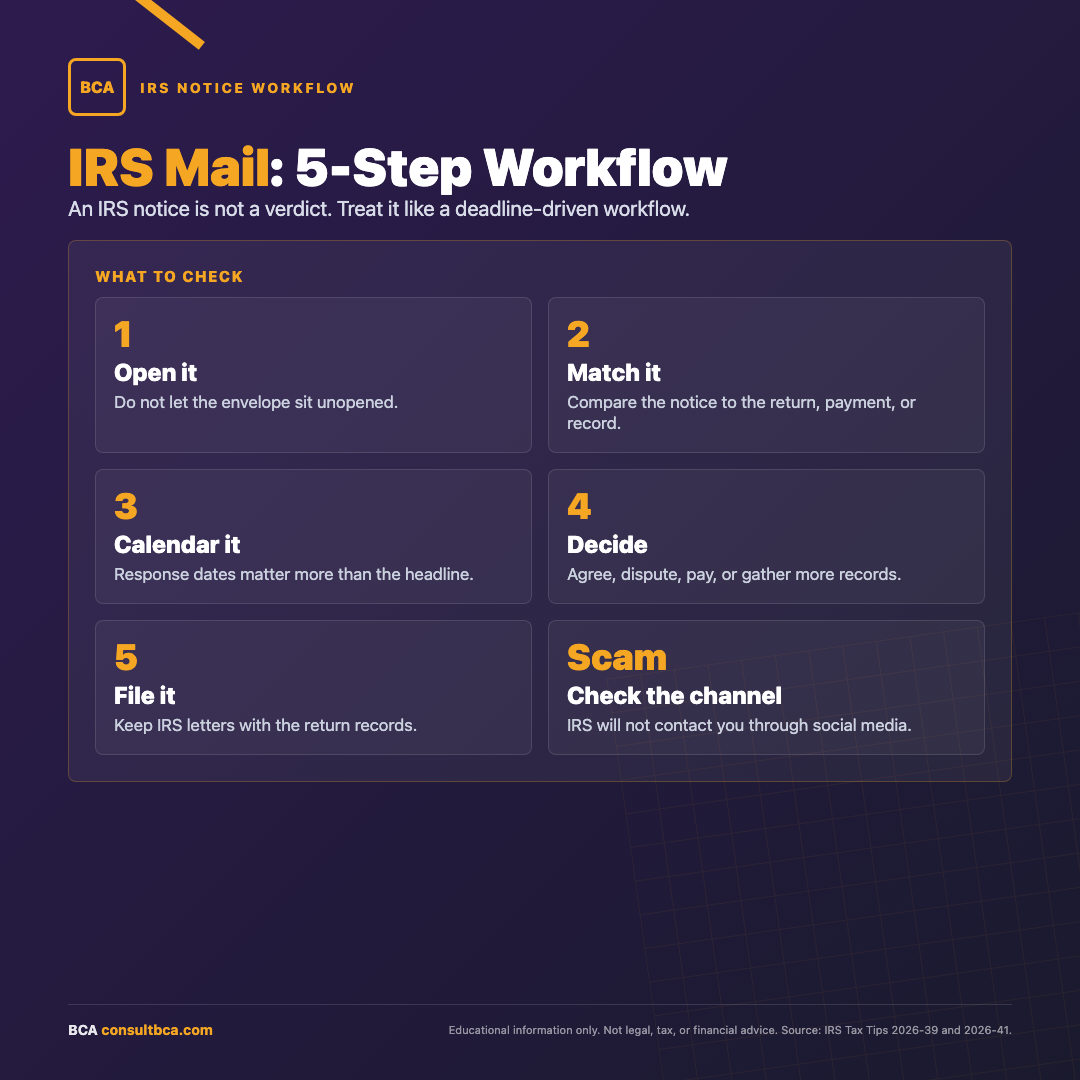
The first 15 minutes
Start with the notice number and tax year. Then match the notice against the return, payment history, transcript, or business records that relate to that year. If the notice says a return was changed or corrected, compare the IRS version against your copy.
If you agree, make notes on your copy of the return and keep the notice with your records. If you disagree, follow the dispute instructions in the notice and include documents that support your position.
Do not reply unless the notice asks for it
Some IRS letters require a response. Some do not. The IRS says taxpayers generally do not need to reply unless the notice specifically tells them to do so.
If a call is needed, use the phone number on the notice, not a number from a web search or social media post. Have the notice and the related return in front of you before calling.
Calendar the response date
The most important line in many IRS notices is the response date. Put it on your calendar immediately. If you need documents from a bookkeeper, payroll provider, tax preparer, bank, or payment processor, request them the same day.
Prompt action can reduce extra interest and penalty charges. It also gives you more room to dispute a notice without rushing.
Your right to be informed
The Taxpayer Bill of Rights includes the right to be informed. In practical terms, IRS notices should explain what the agency changed, why it says a balance is due or a claim was denied, and what appeal or help options may exist.
That does not mean every notice is easy to read. It does mean the notice should give enough information to identify the issue and the next step.
Watch for scams
The IRS will not contact you through social media. First contact from the IRS usually arrives by mail. If a message demands immediate payment through gift cards, crypto, wire transfer, or payment apps, treat it as a scam signal.
For small business owners, the best habit is simple: open every IRS envelope the day it arrives, scan it to your records, calendar the date, and decide whether the notice is informational, payable, disputable, or something that needs a tax advisor.
Sources
- Internal Revenue Service, Tax Tip 2026-39, “Got mail from the IRS? Don’t toss it,” May 12, 2026. https://www.irs.gov/newsroom/got-mail-from-the-irs-dont-toss-it
- Internal Revenue Service, Tax Tip 2026-41, “A more detailed look at what the right to be informed means,” May 19, 2026. https://www.irs.gov/newsroom/a-more-detailed-look-at-what-the-right-to-be-informed-means
- Internal Revenue Service, Understanding your IRS notice or letter. https://www.irs.gov/individuals/understanding-your-irs-notice-or-letter
- Internal Revenue Service, Taxpayer Bill of Rights. https://www.irs.gov/taxpayer-bill-of-rights
Disclaimer
This article is for general educational purposes. It is not legal or tax advice. IRS notices are fact-specific and deadline-sensitive. If you receive a notice involving a balance due, proposed assessment, audit, collection issue, appeal rights, or missing records, consult a qualified tax advisor before the response deadline.